The global plastic crisis is one of the defining threats of our time. Over 11 million metric tonnes of plastic waste flow into our oceans every year — contaminating food, water, ecosystems, and threatening the livelihoods of millions. Without immediate intervention, this figure could triple by 2040, with devastating consequences for our planet and humanity. But the crisis doesn’t start in the oceans — it begins upstream, in our rivers, lakes, and communities.
LAWUNA is at the frontline of this challenge, combining cutting-edge technology, open-source data, and community action to tackle plastic pollution from the fragile freshwater ecosystems of Lake Victoria to the vast marine environments of the Indian Ocean. Together, we are building Africa’s first open-source environmental intelligent platform to monitor, expose, and reduce plastic pollution at its source.
Lawuna Project - Sodzo Foundation
Lawuna, detects, captures and monitors macro pollutants on the shores of fresh water bodies using real-time drone and smart phone imagery.
The global plastic crisis is one of the defining threats of our time. Over 11 million metric tonnes of plastic waste flow into our oceans every year — contaminating food, water, ecosystems, and threatening the livelihoods of millions. Without immediate intervention, this figure could triple by 2040, with devastating consequences for our planet and humanity. But the crisis doesn’t start in the oceans — it begins upstream, in our rivers, lakes, and communities.
LAWUNA is at the frontline of this challenge, combining cutting-edge technology, open-source data, and community action to tackle plastic pollution — from the fragile freshwater ecosystems of Lake Victoria to the vast marine environments of the Indian Ocean.
Together, we are building Africa’s first open-source environmental intelligence platform to monitor, expose, and reduce plastic pollution at its source.
Why Lake Victoria Demands Urgent Action
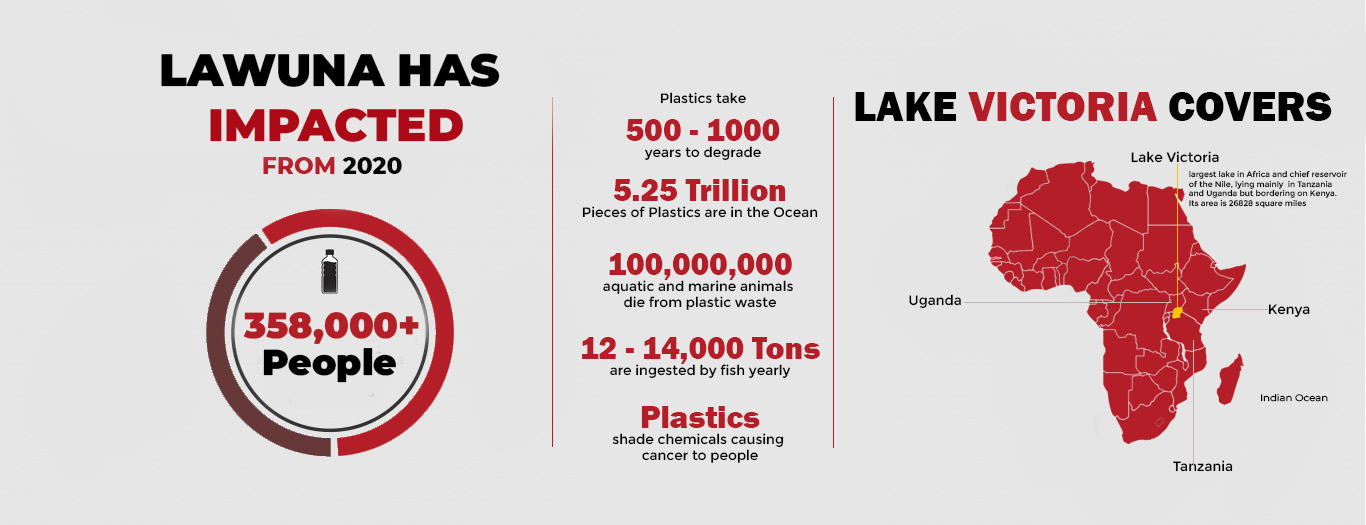
Lake Victoria is the world’s second-largest freshwater lake, spanning 68,800 km² across Uganda, Kenya, and Tanzania, and sustaining over 40 million people.
It provides:
- Essential drinking water
- A $600 million annual fishery crucial for food security
- Transportation networks vital to regional economies
- Irreplaceable biodiversity, including 500+ endemic fish species
But Lake Victoria faces an escalating environmental crisis:
- 100% of locations sampled contain microplastics (Flipflopi Project, 2022)
- 20% of Nile Perch and Nile Tilapia tested contain plastic fragments
- 92% of water samples are contaminated with human waste, plastics, and industrial toxins
- Waste collection rates fall below 50% in many regions, allowing thousands of tonnes of plastic to leak into waterways
Lake Victoria is a lifeline for millions, its decline mirrors a global emergency that demands bold, innovative solutions
Why Oceans Matter
Our oceans are Earth’s most vital life-support system. Covering over 70% of the planet’s surface, they produce more than half the oxygen we breathe, regulate the climate, and provide food, livelihoods, and cultural identity for billions.
- Ocean Statistics That Demand Attention:
- Oceans absorb 25% of global CO₂ emissions, mitigating climate change
- 3 billion people rely on oceans for food security and income
- Marine fisheries support over 200 million jobs globally
- Oceans transport over 80% of global trade
- Coastal ecosystems, like mangroves and seagrass beds, store vast amounts of “blue carbon,” critical for climate resilience
But this blue lifeline is under siege:
- Over 11 million metric tonnes of plastic enter the ocean each year — enough to fill one garbage truck per minute
- By 2050, plastic could outweigh fish in the ocean without intervention
- Over 1 million marine species are affected by plastic entanglement, ingestion, and habitat destruction
- Microplastics have been found from the deepest ocean trenches to human food chains
The health of our oceans is inseparable from the health of humanity, economies, and ecosystems. Solving the plastic crisis in our lakes and rivers is the first line of defense for ocean protection, that is why LAWUNA’s work matters globally.
A world where vulnerable ecosystems like fresh waterbodies and our oceans are free from plastic pollution, where technology empowers communities to become their own agents of change, and where nature and humanity thrive together in resilience and harmony.
To harness the power of technology, open data, and community action to expose, monitor, and reduce plastic pollution in freshwater and marine environments, protecting ecosystems, improving livelihoods, and restoring our planet’s natural heritage.
LAWUNA’s Proven Impact
- Community Mobilization: Engaged more than 358,126 people across East Africa, sparking local action against pollution.
- Data-Driven Evidence: Captured more than 35,000 geotagged images, creating Africa’s largest shoreline plastic pollution database.
- Driving Accountability: Empowered communities to hold polluters and policymakers accountable, leading to targeted environmental interventions.
- Scaling Impact: Expanding LAWUNA to the Indian Ocean coastline, tackling marine macro-pollution where it starts — in freshwater systems.
LAWUNA’s Contribution to Sustainable Development Goals (SDGs) & Livelihoods
LAWUNA’s work is intricately linked to and directly contributes to the achievement of several critical United Nations Sustainable Development Goals (SDGs), and crucially, empowers communities with sustainable livelihood opportunities.
SDG 6: Clean Water and Sanitation:
By actively reducing plastic contamination and enabling the clean-up of waterways, LAWUNA directly contributes to safer drinking water and improved sanitation, significantly reducing waterborne diseases like cholera that continue to plague communities around Lake Victoria dueaba to pollution.
SDG 8: Decent Work and Economic Growth:
-
- Green Jobs Creation: LAWUNA provides valuable training and, where possible, modest stipends to local community members for data collection using smartphones and drones. This creates immediate, eco-friendly income opportunities, particularly benefiting youth and women who are often marginalized in traditional economies.
- Fostering New Green Skills: Our engagement goes beyond data. We actively identify and support the development of sustainable, eco-friendly income-generating skills. This includes hands-on training in sustainable waste management practices, such as plastic sorting and aggregation for recycling, directly connecting communities to nascent circular economies. We also champion initiatives for upcycling plastic waste into valuable products like innovative crafts, durable building materials (e.g., eco-bricks), or even furniture, fostering new micro-enterprises.
- Protecting Traditional Livelihoods: By significantly reducing plastic pollution, LAWUNA directly safeguards the traditional livelihoods of fishing communities. A cleaner lake means healthier fish stocks and improved water quality, which in turn reduces economic losses from contaminated catches and health issues affecting fishermen and their families.SDG 9: Industry, Innovation, and Infrastructure:
LAWUNA embodies innovation through its AI-powered platform and drone technology, pioneering resilient environmental monitoring systems. Our open-source data further supports the development of sustainable industries around waste management and resource recovery.
SDG 11: Sustainable Cities and Communities:
Our concerted efforts directly safeguard urban and rural environments from plastic waste, promoting healthier, more resilient, and sustainable human settlements, especially around densely populated lake shores and coastal areas.
SDG 13: Climate Action:
By preserving and restoring healthy aquatic ecosystems, LAWUNA strengthens their inherent resilience to climate impacts, as these vital ecosystems play a crucial role in carbon sequestration and overall climate regulation.
SDG 14: Life Below Water:
Our core mission is to combat marine and freshwater pollution, directly protecting aquatic biodiversity, preserving critical habitats, and enhancing the overall health of our lakes and oceans.
SDG 15: Life on Land:
We work tirelessly to preserve natural habitats and prevent the insidious infiltration of plastics into terrestrial ecosystems, recognizing the interconnectedness of land and water in maintaining ecological balance.
Empowering Livelihoods Through Green Skills: A Transformative Approach
LAWUNA’s approach goes beyond merely identifying pollution; it aims to be a potent catalyst for economic empowerment and community resilience:
- Community-Led Waste Segregation and Collection:
We provide training and support for individuals to effectively sort and collect specific plastic types. This empowers them to sell these segregated materials to recycling centers, creating a direct and immediate income stream for households.
- Upcycling Ventures and Craft Creation:
Through practical workshops, we empower individuals, particularly women and youth, to transform collected plastic waste into marketable goods. This includes items like fashionable bags, decorative art, or even sturdy construction materials. These ventures foster local entrepreneurship and self-sufficiency.
- Sustainable Fisheries Advocacy:
While not a direct income skill, a cleaner lake – a direct result of LAWUNA’s impactful work – ensures the long-term viability and productivity of fisheries, protecting the primary income source for millions around Lake Victoria.
- Ecotourism Opportunities:
As the lake’s ecological health and aesthetic appeal improve, so does its potential for sustainable ecotourism. This opens up new avenues for income generation through guided tours, guesthouse operations, and the sale of local crafts to visitors, creating a virtuous cycle of conservation and prosperity.